
Jefferson County Arrest Court Path
A Jefferson County jail arrest usually starts with a law enforcement agency such as the Jefferson County Sheriff's Office, led by Sheriff James E. Bailey Sr., then moves through booking at the Jefferson/Franklin County Correctional Facility or another proper holding point. The official county courts page gives the most useful local rule for the next step: felony cases are first heard in Justice Court for initial appearance and filing of affidavit, and Justice Court judges hold sessions at the jail three times each week so each arrested person receives an initial court appearance within three days of arrest. That timing matters because the earliest court records after a jail arrest may not be a Circuit Court case yet. They may be an affidavit, warrant, bond order, or Justice Court entry tied to the first appearance.
Booking and court records serve different jobs. A jail record may show name, arrest or commitment date, warrant or mittimus, custody authority, cause of imprisonment, and release or discharge facts under Mississippi's jail docket law. The court record shows what was filed with the court after the arrest. For the custody side, use Jefferson County jail inmate records. For photo access, use Jefferson County jail mugshots. For court records after an arrest, follow Justice Court, the prosecutor, Circuit Court, and Mississippi Electronic Courts where the case is available.
The local agencies can vary. The sheriff's page and court research identify the Jefferson County Sheriff's Office, Fayette Police Department, Mississippi Highway Patrol, Natchez Trace Park Rangers, Mississippi Department of Wildlife, Fisheries and Parks, and other agencies as possible sources of tickets, arrests, or court matters. That means a court records search should not assume every case began with a sheriff's deputy. The issuing agency, court, and charge level can point the search to a different clerk or docket.
Jefferson County Initial Appearance Records
The local arrest to court flow is best read as a chain: arrest, booking, Justice Court initial appearance at the jail three times weekly within three days, prosecutor filing, then the Circuit Court or MEC pathway if the case moves forward as a felony. At the first appearance, the court may address identity, the charge basis, bond, counsel, and the next setting. A felony case is not complete just because a jail booking lists an allegation. Prosecutor review and later filings can narrow, change, add, or dismiss charges.
- Confirm the person was booked or held locally through the Jefferson/Franklin County Correctional Facility or Sheriff's Office.
- Ask which court handled the first appearance and whether the matter began in Jefferson County Justice Court.
- Use the defendant name, arrest date, charge, warrant number, citation, or case number to ask the clerk for the court record.
- If the matter is a felony, check whether the prosecutor has filed an affidavit, information, indictment, or later Circuit Court case.
- Search Mississippi Electronic Courts for docket access when the case has moved into a court system covered by MEC.
Justice Court is located at the courthouse address listed by Jefferson County and has separate phone and fax contacts from Circuit Court. The county page lists District 1 Judge Marcus Walton and District 2 Judge Maurice Hudson, plus Justice Court clerks Courtna Jackson and Asia Davis. Use the clerk channel for records and docket routing, not for legal advice.
Find Jefferson County Court Records
Mississippi Electronic Courts is the official statewide court portal for electronic court records. Mississippi Judiciary material describes electronic docket access and document viewing or downloading, and a 2025 judiciary news item reported statewide electronic filing completion. For Jefferson County court records after an arrest, MEC is most useful after a criminal matter has been filed in a court that is available through the system. Older, sealed, restricted, or hard-to-find matters may still require direct contact with the Jefferson County Circuit Clerk or Justice Court.
The Jefferson County Circuit Clerk receives and files indictments, motions, criminal papers, judgments, and process in Circuit Court matters. The clerk also draws and qualifies juries. That makes the Circuit Clerk the key local office when a felony case has left the first-appearance stage and moved into Circuit Court. Misdemeanor, traffic, DUI, ordinance, and some warrant matters may remain in Justice Court or another lower court.
| Search Field | Type | Required | Use in Jefferson County |
|---|---|---|---|
| Account or login | Registration | May be required | Public access may require registration; Mississippi Judiciary research notes PAMEC annual registration and per-page document viewing costs. |
| Case number | Text | No | Best when the citation, indictment, or clerk record already gives the number. |
| Party or defendant name | Text | No | Useful when no case number is known, but name spelling must be checked. |
| Court or county | Filter | No | Select Jefferson County or the proper court if filters are available. |
| Attorney | Text | No | May help narrow results in some MEC searches. |
The source image from the Mississippi Electronic Courts portal shows the statewide starting point for electronic court access.
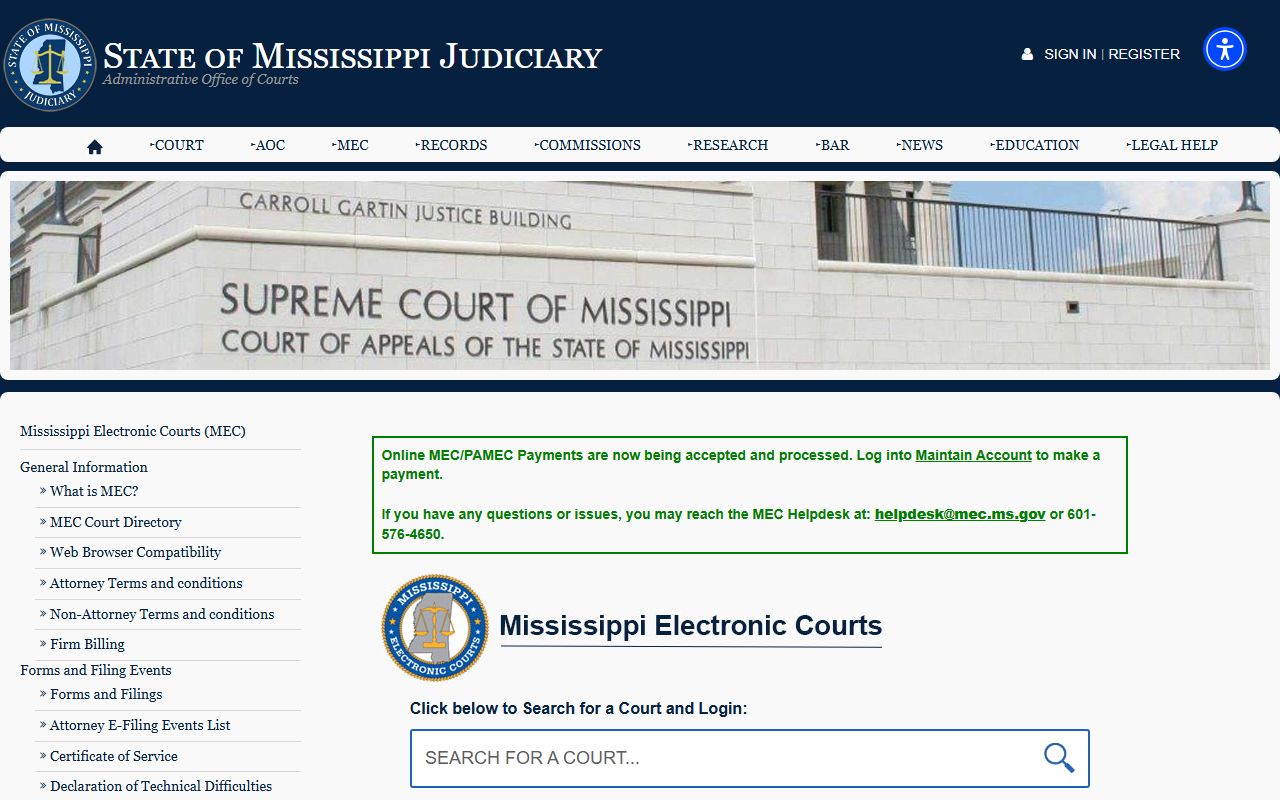
Use that portal as the electronic path, then use the local clerk when the case does not appear or when a certified copy is needed.
Jefferson County Charging Documents
Charges can enter the court record in more than one way. Jefferson County research says all felony cases are first heard in Justice Court for initial appearance and filing of affidavit. From there, a prosecutor may review the facts, the arrest papers, and the available proof before filing or presenting a charge. The County Prosecuting Attorney represents the state in felony matters before justice or county court and in criminal cases appealed from justice or county court to circuit court. The 22nd District District Attorney prosecutes felony cases for Jefferson County after the matter reaches the felony prosecution track.
| Document | Who Uses It | What It Does | Where to Look |
|---|---|---|---|
| Affidavit or complaint | Officer, complainant, or prosecutor | Starts or supports a charge after arrest, often at the Justice Court stage. | Justice Court or clerk contact. |
| Information | Prosecutor | Formal prosecutor charging paper when allowed by law and procedure. | Prosecutor, Circuit Clerk, or MEC if filed. |
| Indictment | Grand jury | Formal felony charge returned after grand jury action. | Circuit Clerk and Circuit Court docket. |
The Jefferson County courts page is the source for the Justice Court, Circuit Court, County Prosecuting Attorney, and District Attorney contact framework.
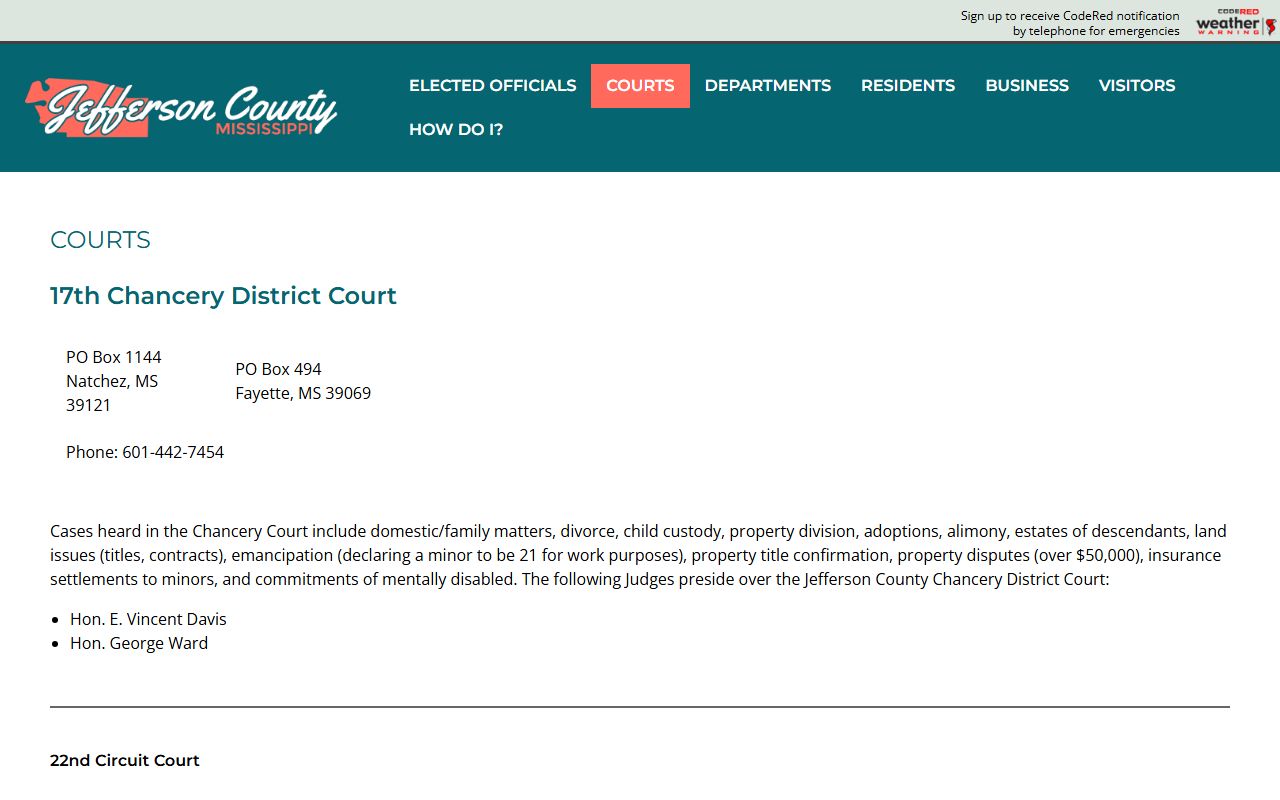
That local court page is especially important because it documents the jail-based Justice Court sessions that occur before many records reach Circuit Court.
Jefferson County Charge Status
A booking allegation is a starting point. It is not the last word. Court records after a Jefferson County arrest may show that a charge is pending, amended, reduced, dismissed, bound over, indicted, or resolved by plea or verdict. A jail docket may preserve custody authority and release facts, while the court docket tracks filed papers and case status. Read each charge line by line because a defendant can have more than one count and each count can move on a different path.
| Status | Plain Meaning | Why It Matters |
|---|---|---|
| Pending | The charge is still open and no final disposition is shown. | Future hearings, bond changes, or prosecutor action may follow. |
| Amended or reduced | The charge changed from the original booking or filing language. | The filed court record may differ from the jail intake record. |
| Dismissed | The court or prosecutor ended that count without conviction. | Check whether the dismissal applies to all counts or only one charge. |
| Nolle prosequi | The prosecutor declined to pursue the charge. | It is not the same as a conviction, but the record may still exist unless expunged. |
| Convicted | A plea or verdict resulted in guilt on that charge. | Sentencing, MDOC records, and later custody records may follow. |
Jefferson County Prosecutor Records
The County Prosecuting Attorney listed by Jefferson County is Ikeecia Colenberg. The research states that the County Prosecuting Attorney represents the state in felony matters before justice or county court, represents the state in criminal appeals from justice or county court to circuit court, may present matters to the grand jury, and handles certain youth court misdemeanor matters and other cases not assigned to the District Attorney. For felony prosecution, Jefferson County is part of the 22nd District. The official Copiah County District Attorney page confirms the District Attorney prosecutes felony cases in Copiah, Claiborne, and Jefferson counties and lists a Jefferson County office at the courthouse.
The prosecutor role matters because the filed charge can change after arrest. Officers may book a person on one allegation, but the prosecutor decides what to file, whether to amend, and whether a matter should go to a grand jury. For a felony, the record may begin in Justice Court, then later show as a Circuit Court case, indictment, plea, trial setting, or sentencing entry. For misdemeanors and traffic or ordinance cases, Justice Court may remain the primary record source.
The source image from the 22nd District Attorney page confirms Jefferson County coverage for felony prosecution.
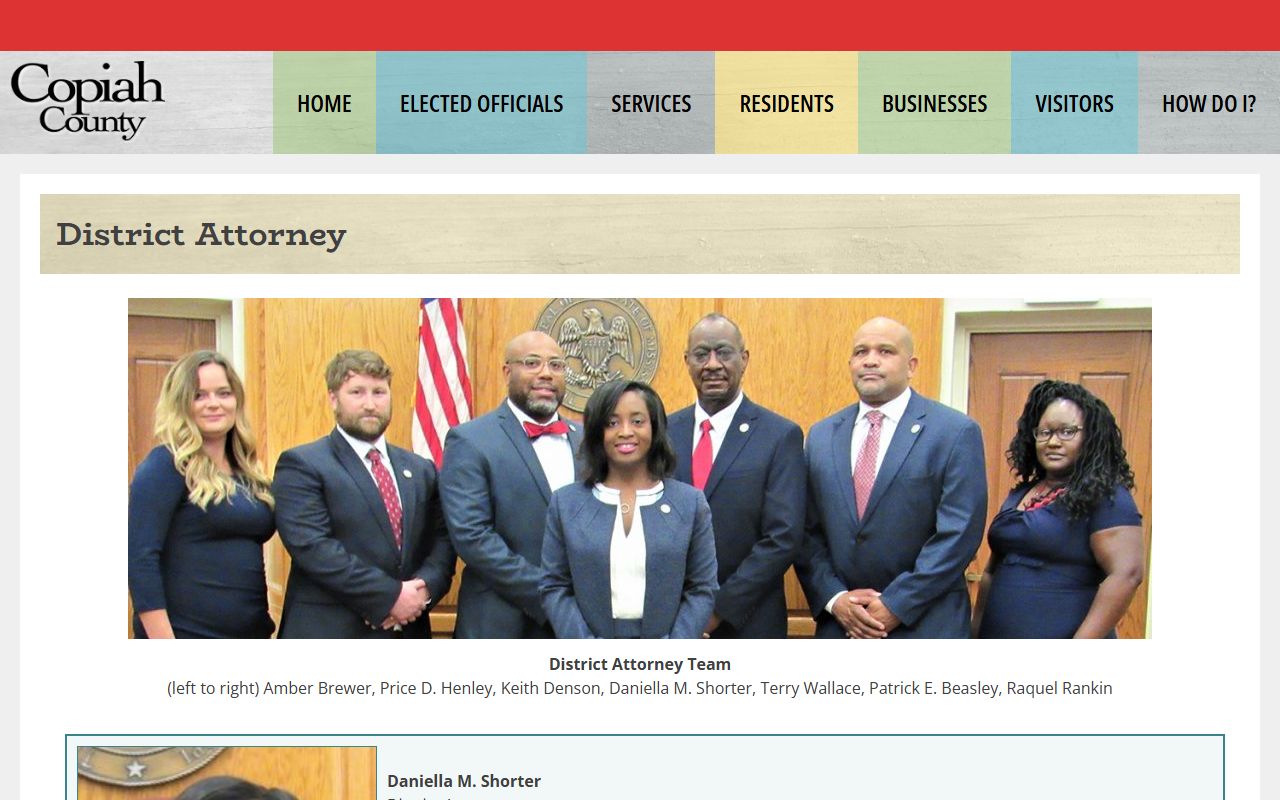
Use that office for prosecution routing, while using the clerk for filed court papers and docket copies.
Bond After Jefferson County Arrest
Jefferson County does not publish a jail bond desk page, a bond payment schedule, accepted methods, or bond hours in the research source set. The practical route follows the court process. After booking, the first appearance in Justice Court is the point where bond may be addressed or confirmed. A person checking bond should verify the current amount, the court that set it, the payment location, and whether another hold blocks release. A hold can come from another county warrant, probation or parole, MDOC, federal custody, or immigration custody.
| Bond Type | How It Works |
|---|---|
| Cash bond | The full court-set amount is posted in cash if the court allows that method. |
| Surety bond | A licensed bail agent posts a bond under court rules and the agent's terms. |
| Property bond | Real property may be used if the court accepts it and the paperwork is complete. |
| Personal recognizance | The court releases the person on a promise to appear, sometimes called PR or own recognizance. |
| No-bond hold | Release is blocked until the hold is cleared or a court changes the order. |
Note: Bond information can change fast, so verify it with the facility, court, or attorney before sending money.
Jefferson County Warrant Records
No official Jefferson County active warrant search, sheriff warrant list, most-wanted page, or mobile app warrant feature was located. A warrant can still create court records after a jail arrest. The jail docket law recognizes the warrant or mittimus as the authority by which a person is received or held. The court side may then show a bench warrant, arrest warrant, capias, probation warrant, out-of-county hold, or detainer.
Use direct channels for warrant routing. The Jefferson County Sheriff's Office can route local warrant questions. Justice Court handles lower-court warrants, traffic, DUI, county ordinance, and initial appearance matters. Circuit Court and the Circuit Clerk handle felony case status, indictments, and filed criminal records. VINE is useful for custody and release notice, but it is not a warrant search. Clearing a warrant should be handled through the court or counsel.
Charges and Convictions Compared
Mississippi court records after an arrest must be read with care because a charge is not a conviction. A charge is an accusation filed or pursued by the state. A conviction comes later, only after a guilty plea, verdict, or other legal finding that results in guilt. This distinction is central for Jefferson County records because a booking charge, first appearance affidavit, prosecutor filing, and final Circuit Court outcome can all use different wording.
| Point | Charge | Conviction |
|---|---|---|
| Stage | Early accusation after arrest or filing. | Final or near-final result after plea or verdict. |
| Proof level | May rest on probable cause or prosecutor filing. | Requires guilt under criminal procedure. |
| Record source | Jail docket, affidavit, complaint, information, indictment, or docket entry. | Judgment, sentencing order, disposition, or docket result. |
| Public meaning | Does not prove the person committed the offense. | Shows a legal finding or plea unless later set aside. |
Sealed and Expunged Records
Mississippi law allows expunction in specified situations. The research identifies Mississippi Code section 99-19-71 as the expunction statute. It can apply in certain cases where an arrest was made and the person was released and the case was dismissed, charges were dropped, no disposition occurred, the person was found not guilty, or an eligible conviction fits the statute. Expunction is a court process. It is not the same as asking a website to hide a record.
| Issue | Sealed | Expunged |
|---|---|---|
| Public access | Public access is limited by court order or law. | The record is cleared in the way the expunction order directs. |
| How it happens | Usually through a court order or restricted-record rule. | Through a petition and order under Mississippi expunction law. |
| Effect on agencies | Some agencies may retain limited access. | The order controls what agencies must remove or restrict. |
| Best source | The clerk or court order. | The expunction order and the clerk's record. |
Restricted Jefferson County Records
The Mississippi Public Records Act, Mississippi Code Title 25, Chapter 61, starts from a policy of access to public records unless a law provides an exemption. That does not mean every court record after an arrest is open online. Juvenile matters, sealed cases, expunged records, active-investigation material, some victim information, and records restricted by court order may be withheld or limited. A clerk may also require a written request, a case number, or a copy fee for paper records.
Important: Private background-screening decisions require FCRA-compliant sources, not casual court or jail lookups.
For the strongest record trail, compare the jail custody facts, the Justice Court first-appearance record, the prosecutor filing, and the Circuit Court or MEC docket. If those sources conflict, rely on the originating court or agency that created the record.